VINCENNES (Indiana) – American farmers often face cumbersome regulatory and compounded reporting issues that hamper both their expansion opportunities and worse, the capacity to effectively sustain operations. Fallow AG, a new fintech company based here, strategically focuses on addressing and resolving those critical issues—including capital access–through innovative data-driven means.
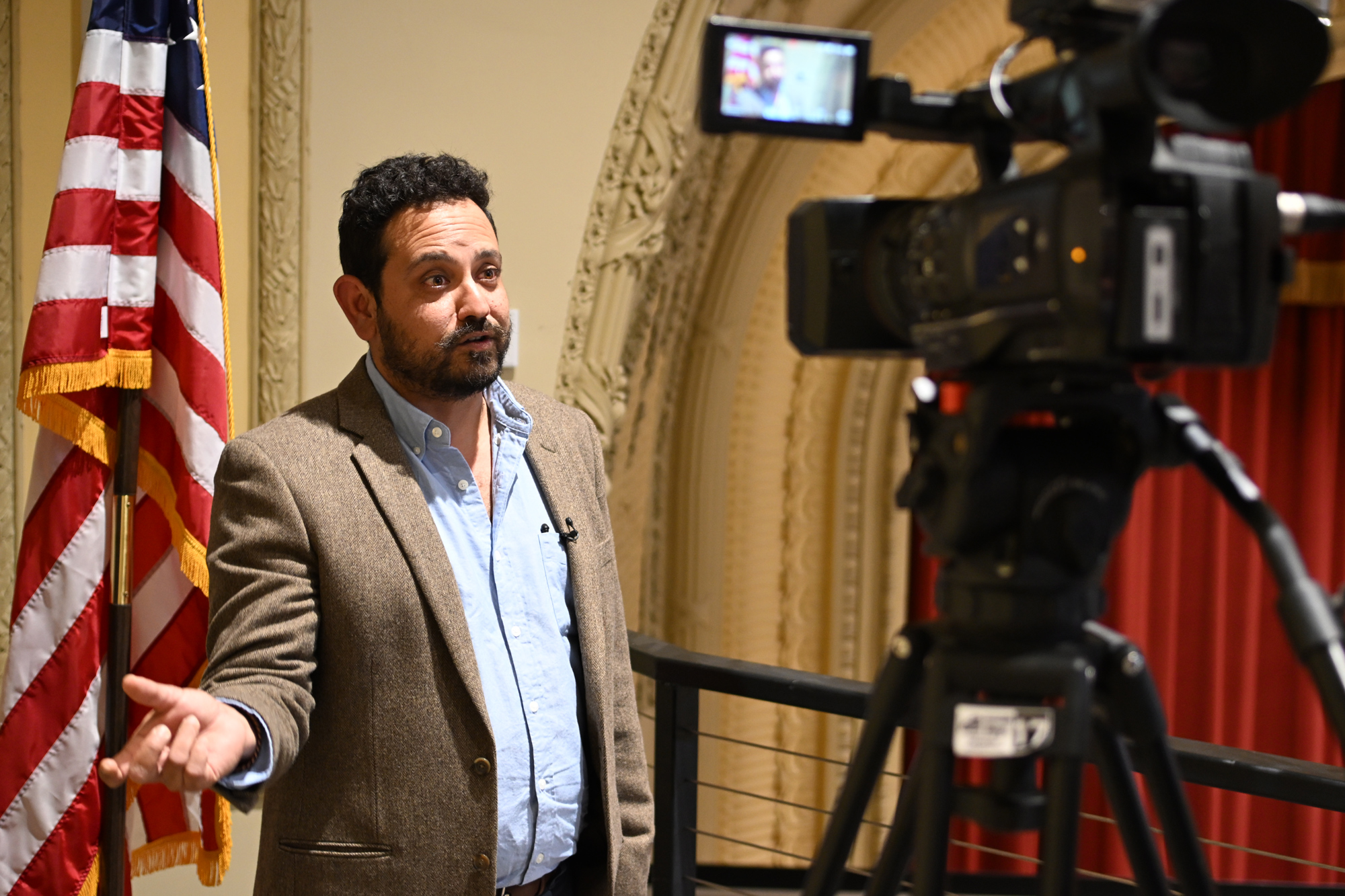
According to Naveed Iqbal, CEO of Fallow AG, this significant challenge for farmers is reflected in an annual acreage report that the U.S. Department of Agriculture requires as a condition of most federal farm programs. Since crop and production performance can occasionally be adversely affected by drought and other issues, the information formally filed on that acreage report reappears in disaster and loss claims. It also has to square with a second acreage report the farmer files with its crop insurance provider.
The information required on the forms does not reflect modern farm operations. “The farmer is essentially asked to produce a document that has almost nothing to do with how the operation actually runs,” said Iqbal.
The net effect? A poor and inadequate record of a farming operation can emerge, especially in complicated operations. That record produced by that process can negatively impact farmers in a major way.
A negative cascading effect can result as the submitted information is consolidated into financial records that include farm program payments, insurance history and loss claims. These consolidated records can inadvertently exaggerate negative issues against performance.
The Fallow CEO, a serial founder who comes from a senior banking and operations technology background, explains how this happens: “The federal form process was built for a certain kind of farm. Growers who raise specialty crops, farm across state lines, or run layered ownership structures spend a major part of every year translating what they actually did into outdated information boxes that were not built to hold it.”
These are the records that a lender reviews prior to extending an operating line of credit.
“This may seem abstract, but it’s what Indiana and U.S. farmers face every year,” said Iqbal. “The key point? A farm that is hard to describe on paper is hard to price, and lenders make up the difference by asking for more documents rather than by getting a better picture.”
Ethan Anson, 5th generation farmer in Knox County confirmed the challenge: “It’s hard to say with real confidence what our operation qualifies for in a given year. That’s not a knock on anybody. There’s just an enormous amount of complexity stacked up in these programs.
“Fallow is working towards helping me not leave money on the table,” he emphasized.
“Crop diversification helps mitigate risk and grow our farm, but it creates a complicated record keeping process,” said Blake Mouzin, a fourth-generation farmer in Knox County. “Fallow simplifies and streamlines that process and gives us more tools for evaluation.” –
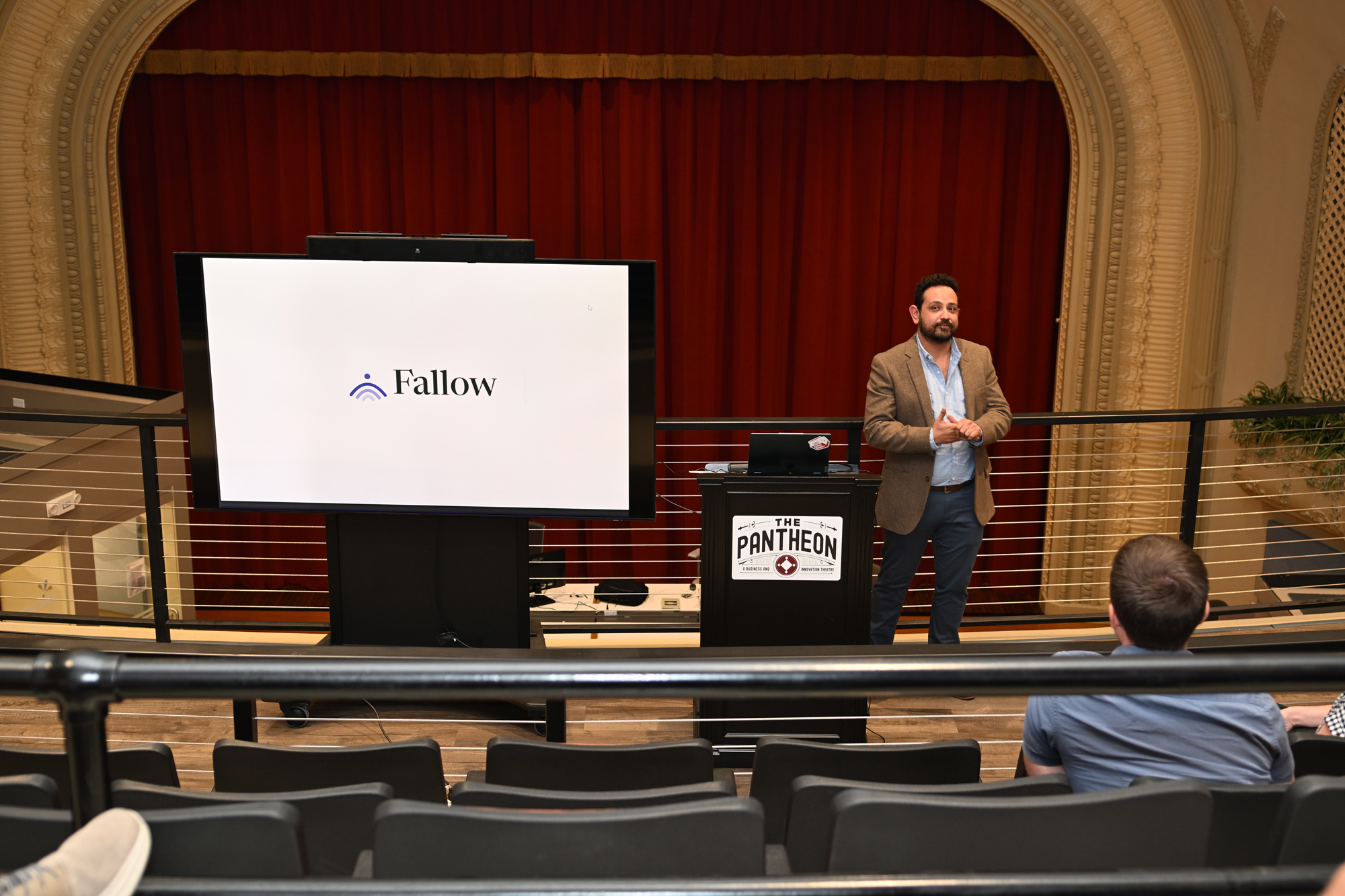
Fallow AG, the new fintech company starting up in Vincennes, plans to level that financial playing field by establishing new processes and standards to produce an accurate view of performance. The company formally began operations in The Pantheon business and innovation center here on August 30.
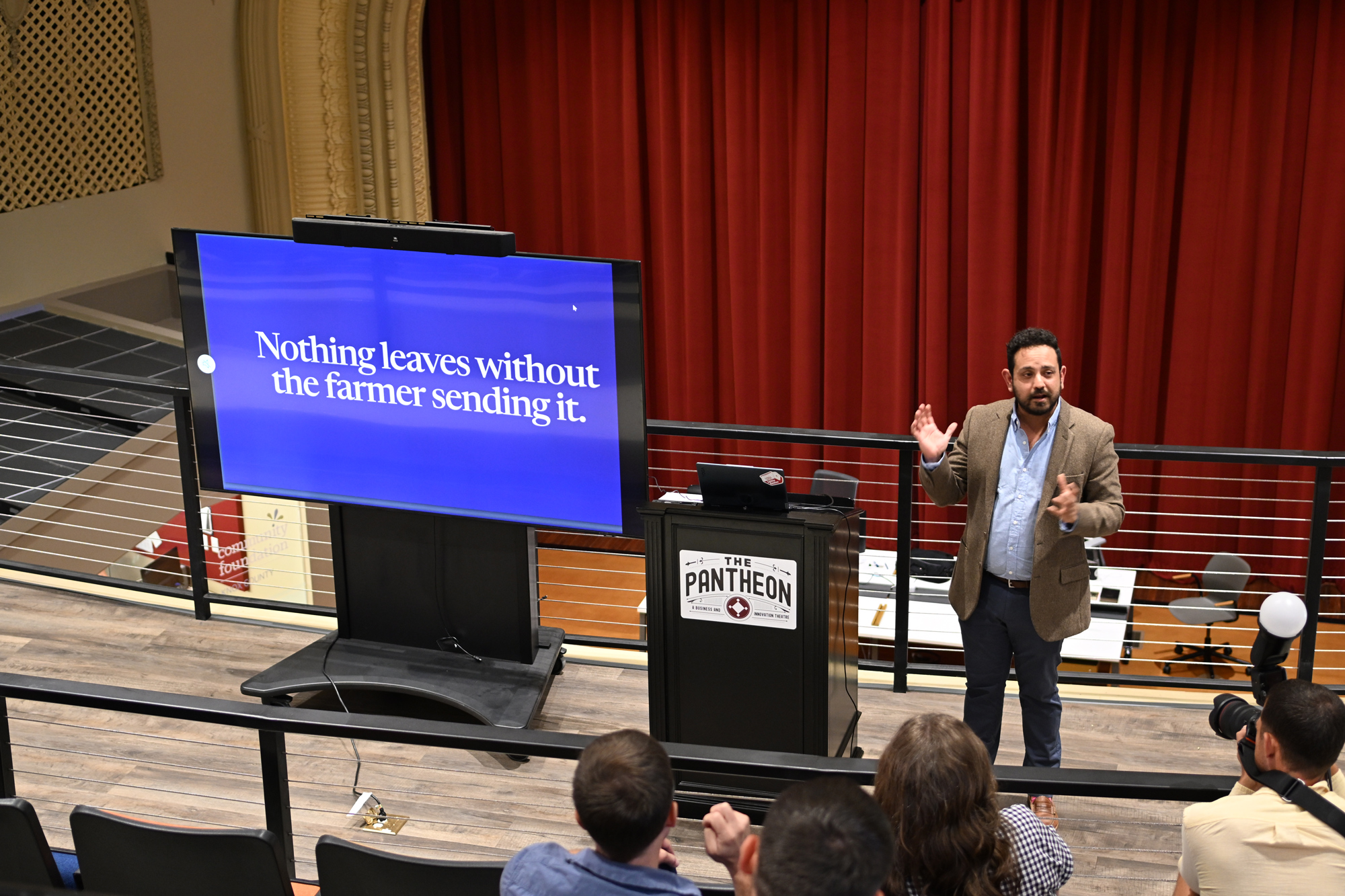
How will Fallow AG achieve change and resolve issues? “The company takes the documents an operation already produces, including acreage certifications, farm and tract maps and crop insurance elections, and builds a single record of the operation out of them,” explains Iqbal. “For the farmer the near-term value is practical, as Fallow AG produces cleaner filings, a clear view of what the operation qualifies for, and documents federal program money the farming operation never claimed.”
Iqbal emphasizes one rule as the center of Fallow AG: “The farmer sees the same picture of the operation that a lender would see, and Fallow only helps a farmer improve the accuracy of that view.”
Iqbal came to the problem from an objective fintech view outside agriculture. He holds a PhD in applied mathematics and a master’s in operations research and spent years at JPMorganChase building risk and fraud systems, including the device authentication protecting more than 40 million banking customers. He went on to found and lead a fintech company in Columbus, Ohio, from 2019 through 2025.
“I never saw myself living in a small town,” he said. “But my family wanted to move closer to grandparents, so I was fortunate to move to Vincennes a year ago.”
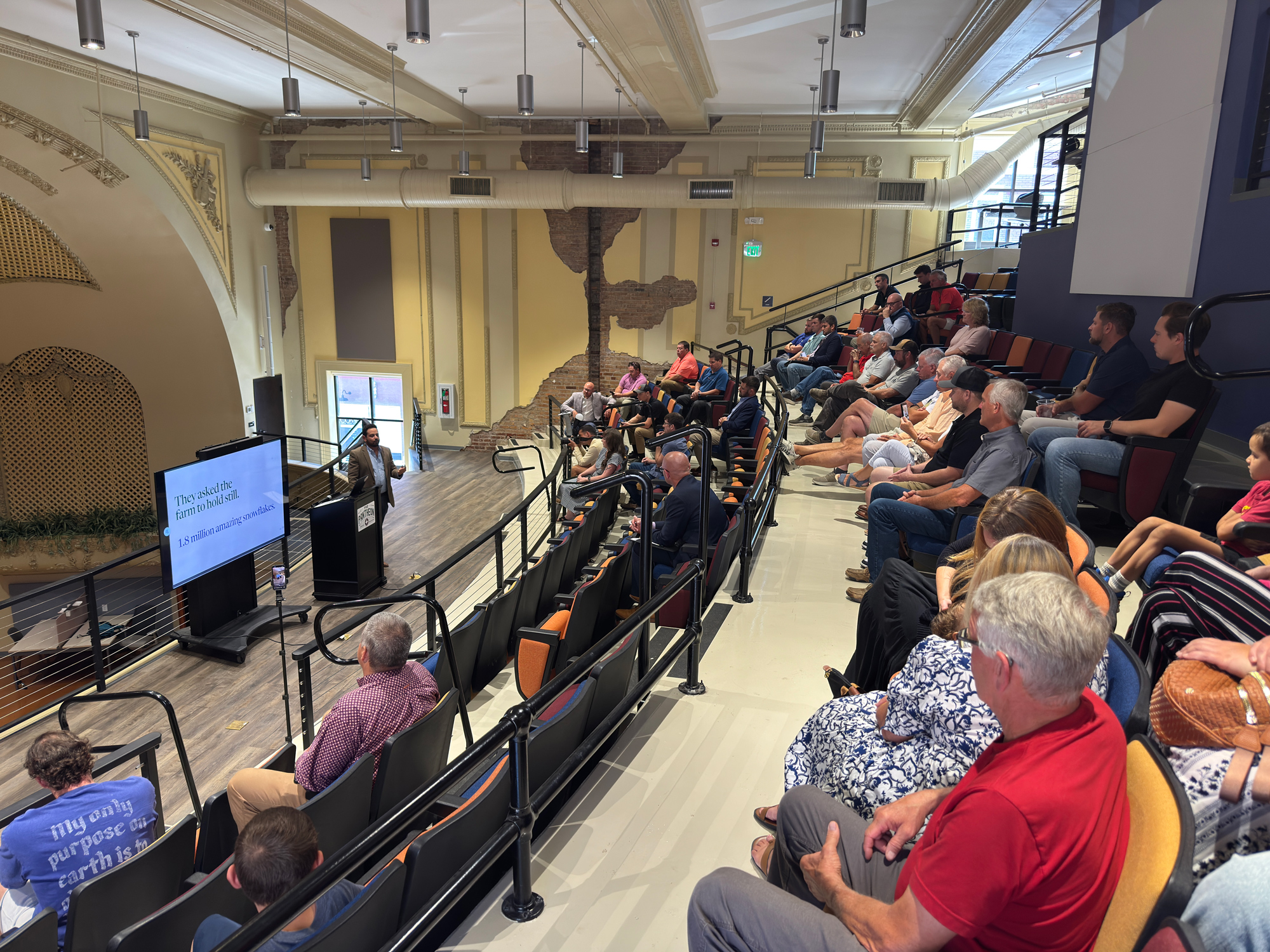
In Knox County he found The Pantheon, a business and innovation center in downtown Vincennes, and started sitting down with farmers, lenders and county Farm Service Agency staff to learn how agricultural credit decisions get made.
“With respect to successful farming, people really don’t appreciate how hard this is to do, and how well American farmers do it,” he said.
He has since conducted two open sessions in the building, putting early versions of the Fallow AG model in front of farmers, bankers and ag industry people for evaluation and refinement.
“I found my people at the Pantheon,” he said.
“Fallow AG represents excellent potential and a strong match for the development assets in the region,” said Drew Garretson, President of the Pantheon board and a vice president with Keystone Cooperative in Indianapolis. “We expect Fallow AG to develop the means to address key issues in agricultural-related finance and capital formation.”
The start-up is strategically positioned to tap critical resources for an agribusiness-centered initiative, according to Chris Pfaff, CEO of Knox County Indiana Economic Development. “There exists a strong depth of related capital and agribusiness experience in the Knox County region that Fallow AG can leverage as it builds its models and growth opportunities,” noted Pfaff.
“Knox County sits at the intersection of deep agricultural knowledge and a growing entrepreneurial culture, and Fallow AG’s launch reflects that,” said Christy Wright, president and CEO of AgriNovus Indiana.
“When a founder with fintech experience lands in a community this close to production agriculture, good things happen,” she added. “We are excited to see this kind of activity continue to grow across Indiana.”
Fallow Ag was selected this summer to take part in AgriNovus Indiana’s 2026 Velocity Accelerator. Twelve ag bioscience startups were chosen statewide, four of them in the farmer-focused innovation track. Guided by research and strong mentorship, Velocity participants will create solutions to defined challenges. Velocity culminates with a $25,000 prize for each track and an opportunity to move big ideas forward.
The company works with three signed design-partner operations across Indiana row-crop and specialty farms, and will work out of The Pantheon.
# # #

About Fallow Ag. Fallow Ag is a risk translation layer for agriculture, based in Vincennes, Indiana. There is no standard way to describe a farm’s risk. So every provider of capital to agriculture, from community banks and Farm Credit associations to ag retailers and co-ops, builds and maintains a private version of the same process, and farmers are asked to produce records that fit none of them. Fallow Ag builds the missing standard, starting with tools a farmer uses because they are useful on the farm. Fallow Ag makes no loans. For more information, please visit https://www.fallowag.com/
 About The Pantheon, a business and innovation theatre — The Pantheon’s mission is to spark innovation and fuel entrepreneurship by inspiring, growing, and supporting new and existing businesses in Knox County. We are a 501(c)(3) nonprofit led by a diverse board of entrepreneurs, nonprofit, and government representatives. Our operations are funded by membership fees, event space rentals, and generous donations from corporate sponsors and angel investors from the south-central Indiana region. For more information, please visit https://www.pantheontheatre.org/